SeeNL
High-end motion for a film platform.
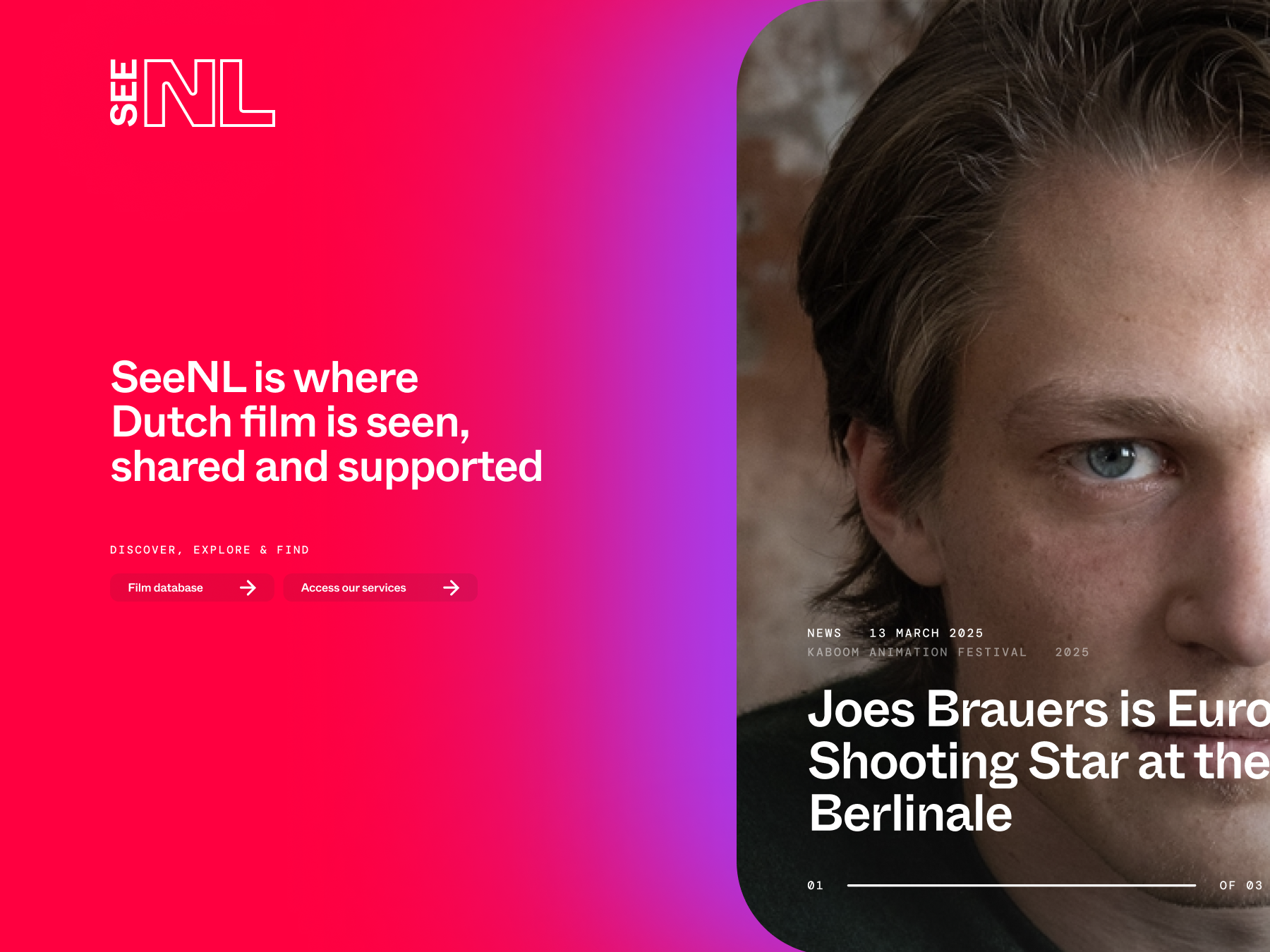
A clear motion vision, and no time to build it.
The problem on SeeNL was the one every film platform runs into. A clear design vision for high end motion, and a timeline that cannot pay for it. Motion is the easiest line to cut, so it gets cut, or it ships flat. The design was already there. What the project did not have was a way to deliver premium motion without breaking the budget.
The tension is structural, not a planning mistake. Motion sits at the end of the pipeline, after design is signed off and after the build has already eaten the schedule. By the time anyone opens the animation conversation, the only options left are a library preset or nothing. For a platform whose whole subject is moving image, shipping a static site was the wrong kind of irony.
So the brief I set for myself was narrow. Keep every piece of motion the design intended, at the fidelity it was imagined at, inside the existing timeline. No descoping, no placeholder easing, no "fast follow" that never follows.
Cinematic pacing, applied to an interface.
The motion itself borrows from the platform's subject. Film does not cut on a whim; it holds, then moves with intent. The interface behaves the same way. The hero reveal is staged like an opening shot, elements arriving in sequence rather than all at once. Nothing bounces, nothing loops for decoration. Every animation is either revealing content or confirming an action.
That restraint is what makes it read as premium. The curves are long and asymmetric, fast out of the gate and slow to settle, the way a camera move ends. Applied consistently across the hero, the transitions and the footer, it becomes a signature instead of an effect.
Sitting next to the designer, tuning the motion in the browser.
The solution was to collapse the loop. I worked next to the designer through the build. No spec doc in the middle, no animation handoff to argue over. When a curve felt wrong we adjusted it in the browser together and watched the result on the real page. Decisions that would normally have taken a round trip of comments closed in minutes.
This is the part of motion work that documents cannot carry. An easing curve on a spec sheet and the same curve on a real page with real content are two different animations. Timing that looks right in a prototype dies against a loading image. Working in the browser from the first day meant every judgement was made against the truth, not against an approximation of it.
Agentic workflows carried the repetitive build work. Scaffolding components, wiring states, setting up the motion plumbing. That cleared the time to spend on the parts that actually carry the feel of the product, which is what a normal budget can never afford. The hours saved on boilerplate went directly into tuning, the one activity that separates motion that ships from motion that gets cut.
Motion survived the build.
The impact was simple. Motion made it into the shipped build. The hero reveal and the animated footer landed at a level the team could not normally have paid for, on a normal timeline. Premium motion that would otherwise have been cut became part of the product.
The shape of the role made it possible. A design engineer sitting between intent and code, with agentic tooling absorbing the scaffolding work, turns motion from a line item into something that survives the build. There was never a handoff where fidelity could leak out, because there was never a handoff.